
THE CRISIS OF CHRISTIAN POLITICS AND MORAL FORMATION
The Church possesses the divine audacity not only to make Ghana a truly proud Christian nation, but to influence the entire world. Our vocation is to the global village, not merely to a subset called Ghana. So why should we pride ourselves on the false testimony that Ghana is a Christian country, when even small communities like Tokokoe in the Volta Region or Ofuman in the Brong Ahafo area cannot genuinely be identified as Christian towns?
Even Kreshie We (a corruption of “Christian Home”) in Gbese–Ga Mashie, which once hosted both Danish and British missionaries, can hardly be described as a Christian home today. Not even places like Amakom or Bantama can factually be called Adventist towns.
Until we get the arithmetic right and strike the right chord, ensuring that, as gospel engineers, we intentionally reach the still-untold millions with the Good News through the power of His grace, spiritual formation, and CHARACTER TRANSFORMATION, our Christian country identity will remain more of a political cliché than a living testimony of truth.
For politics, as a behavioural science, must concern itself with character, not merely charisma. Character itself is deeply rooted in wisdom and knowledge. That is why one must continually seek both, if he or she truly desires to lead well. In God are all the provisions and divine increments needed to make us the very best in our various spheres of life, anywhere and anyhow.
Politics is the act of ruling, governing, and exercising stewardship. As Christians, we are called to rule and dominate, to “occupy till He comes.” We are described as the salt of the earth, the light of the world, and overcomers. Therefore, we already possess the spiritual accoutrements necessary to engage in governance and public leadership, not to conform to the world, but to make it better through the excellence God has deposited in us.
God’s support system enables us to engage every endeavour, condition, or situation according to His will, in fulfilment of the necessity of His choice, His selection, and the mandate of His calling upon our lives. If we continually listen to the Father and walk in obedience to His will, we shall not only fulfil good purposes through the work of faith, but also satisfy His delight and the necessity of our calling.
The blueprint for Christian politicians can be found in the prayers of David: “May righteousness flourish and peace abound” (Psalm 72). Authority is affirmed in 1 John 5:5, while order, service, accountability, and physical location are reflected in Revelation 2 through the message to the seven churches and its relevance to community support programs in helping people find happiness in Jesus Christ, in their own homes, in their personal relationships, and as contributing members in their communities.
Before Ghana can truly claim a national identity as a Christian country, the Church itself must first develop a strong and intentional system of training in:
moral leadership,
developmental justice,
political honesty,
spirituality in governance, and
unity above propaganda for members with political ambitions.
Such formation would help cultivate social discipline, maturity, fairness, and moral restraint, especially in situations where two or more members from the same church are contesting for the same political position. Christianity must never become a tool for manipulation, division, emotional blackmail, or political advantage.
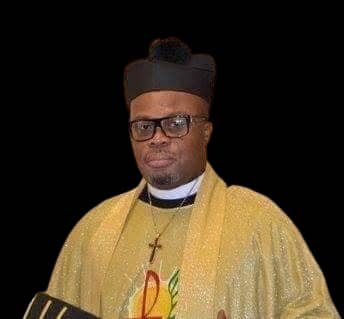
Osɔfo Nii Naate Atswele Agbo Nartey