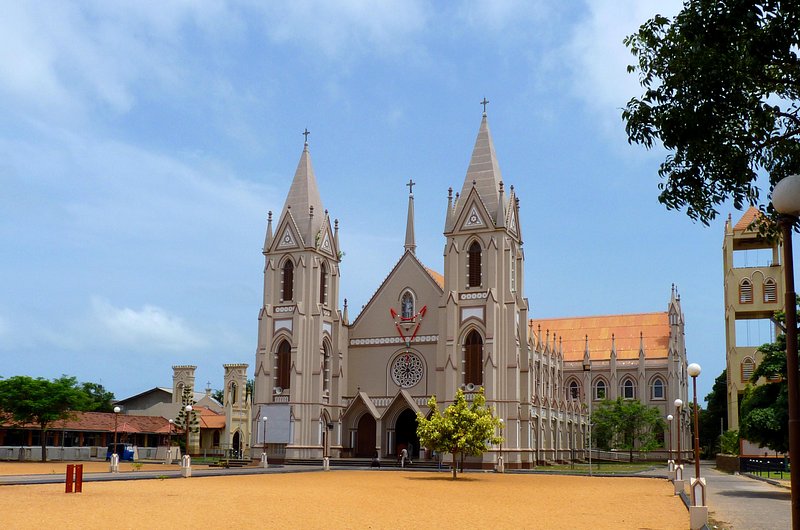
There is an emerging political truism in Ghana that sounds irresistibly simple: win the heart of the Church, and you win the national election. On the surface, the arithmetic appears convincing. The Church of Pentecost alone has more than four million members. When combined with the Catholic, Methodist, Presbyterian, and numerous charismatic and Pentecostal churches, Ghana’s Christian population constitutes a significant proportion of the electorate. Their influence in education, healthcare, and community development makes the Church an institution no serious political strategist can ignore.
Yet, as Ghana prepares for the 2026 general elections, it is time to question a popular assumption: that the Church functions as a unified political voting bloc. While attractive in theory, this belief is politically misleading and potentially harmful to both democracy and the Church’s prophetic mission
The first weakness in the “win the Church” theory is the assumption that shared faith produces shared political choices.
Ghana’s electoral history tells a different story. Ethnicity, regional identity, economic conditions, family traditions, and personal convictions frequently shape voting behaviour more than denominational affiliation. Christians worship together, but they do not necessarily vote together.
Experience also shows that when influential pastors publicly endorse candidates, congregations seldom respond with one political voice. Instead, such endorsements often create discomfort and division. Many believers regard partisan campaigning from the pulpit as inappropriate and quietly vote according to their own conscience.
The secret ballot remains one of democracy’s greatest protections. Inside the polling booth, every citizen answers to conscience not to clergy.
The Prophetic Versus The Political
Ghana is constitutionally a secular state. The Church serves the nation best not by becoming an extension of political parties but by remaining an independent moral voice.
Whenever churches become too closely associated with political power, whether for appointments, contracts, influence, or privileged access, they may gain temporary relevance while sacrificing long-term credibility.
Across Africa, history repeatedly demonstrates that once the Church becomes identified with a ruling government, it often finds it difficult to challenge corruption, injustice, abuse of power, and poor governance.
The Church was never called primarily to deliver electoral victories. It was called to proclaim truth, defend justice, care for the vulnerable, and hold leaders accountable. The moment it openly joins partisan competition, it weakens its ability to speak with moral authority.
The Church’s Real Contribution to Ghana
None of this diminishes the Church’s enormous contribution to national development.
For generations, Christian denominations have established some of Ghana’s finest schools, colleges, hospitals, clinics, and vocational institutions. In many rural communities, churches provided education and healthcare long before the arrival of government services.
The Church is also one of Ghana’s strongest social safety nets. Through scholarships, food assistance, healthcare support, counselling, skills training, and emergency relief, churches continue to support thousands of vulnerable families.
During elections, Christian bodies have consistently promoted peace, dialogue, and national unity. Their credibility enables them to mediate conflicts and calm political tensions in ways few institutions can.
These contributions represent the Church’s greatest public influence not partisan endorsements.
What Christians Really Vote For
If politicians genuinely seek the support of Ghanaian Christians, the answer is not found in securing endorsements from bishops or appearing on church platforms.
It lies in solving people’s problems.
The Ghanaian Christian is simultaneously a worshipper, parent, farmer, trader, teacher, student, entrepreneur, and worker. Like every citizen, Christians worry about employment, inflation, healthcare, education, food prices, electricity, housing, roads, and personal security.
Ultimately, voters ask one simple question:
“How will this candidate improve my family’s future?”
No church endorsement can replace a convincing answer.
The Church’s Greatest Political Influence
Ironically, the Church exercises its greatest political influence outside partisan politics.
Its enduring contribution is the formation of citizens with strong moral character.
A Church that teaches honesty, discipline, compassion, integrity, accountability, forgiveness, and respect for the rule of law strengthens democracy more effectively than any campaign endorsement.
When citizens refuse to sell their votes, reject corruption, demand accountability, and insist upon ethical leadership, democracy becomes stronger.
That is influence no political campaign can purchase.
The Final Verdict
The belief that “winning the Church means winning the nation” misunderstands both politics and Christianity.
The Christian community is not a voting bloc that can be delivered through ecclesiastical endorsements, religious symbolism, or political photo opportunities. No denomination or church leader determines how millions of individual Christians cast their ballots.
For Christian politicians, however, the Church remains their natural community of faith, friendship, and service. It is where values are nurtured and where public leadership is often shaped. Engagement with the Church is therefore both legitimate and necessary, but it should never be mistaken for an electoral shortcut.
The road to national victory lies elsewhere. It is found in earning the confidence of ordinary Christians through principled leadership and policies that improve everyday life: creating jobs, stabilising the cedi, reducing the cost of living, improving roads, strengthening education and healthcare, expanding affordable housing, and showing genuine compassion to society’s most vulnerable, including retired gospel workers who devoted their lives to serving both Church and nation.
Christians, like all Ghanaians, vote with both their faith and their lived experiences. They are more likely to support leaders whose character reflects integrity, humility, justice, compassion, and competence than those who merely seek the approval of church hierarchies.
This is the lesson I respectfully commend to every Christian seeking political office or public service. A lasting political legacy will never be built on ecclesiastical endorsements. It will be built on transformed lives, stronger institutions, and policies that reflect both good governance and genuine Christian compassion.
In the end, Ghana will not be won by capturing the pulpit.
It will be won by earning the trust of the people one Christian, one family, one community, and ultimately, one nation at a time.
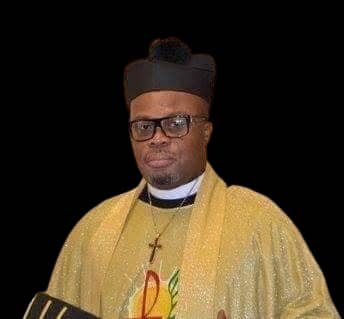
Venerable Dr Nathaniel Nii Naate Atswele Agbo Nartey
Global Gospel Reforms Ministry Int