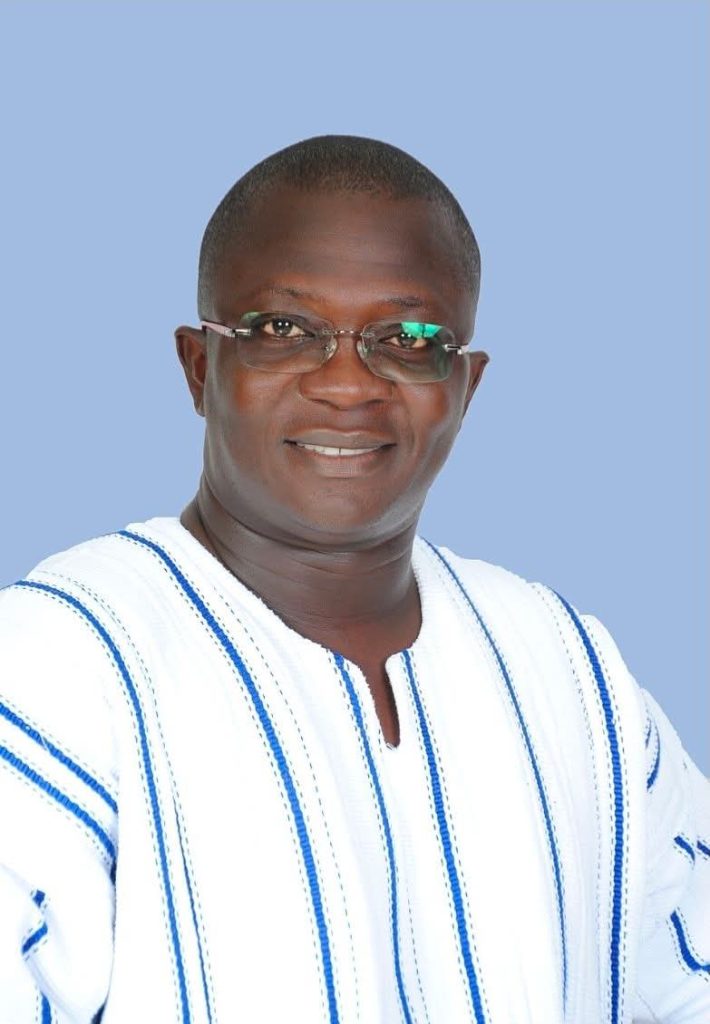
Politics is inherently dynamic. Influence rises and falls according to changing circumstances, party strategy, and the confidence of supporters. In the case of Kennedy Agyapong, many political observers believe his standing within the New Patriotic Party (NPP) has declined significantly following the party’s 2026 presidential primary.
For years, Kennedy Agyapong was regarded as one of the NPP’s most outspoken and influential personalities. His bold opinions, financial contributions, media presence, and grassroots appeal earned him national recognition and a loyal following. However, recent developments have created a growing perception that his influence within the party has diminished.
Following the NPP’s presidential primary and subsequent political realignments, Agyapong appears to have assumed a less prominent role in shaping the party’s direction. His reduced visibility in major party activities has fuelled debate about his current influence and political future.
The presidential primary, held on 31 January 2026, resulted in a decisive victory for Dr. Mahamudu Bawumia. Although Dr. Bryan Acheampong did not secure the party’s presidential nomination, he delivered a respectable performance, outperforming Kennedy Agyapong in several constituencies and strengthening his profile within the party.
Despite his defeat, Acheampong quickly shifted his attention from competition to reconciliation. Rather than deepening divisions, he consistently appealed for unity and encouraged party members to rally behind Dr. Bawumia ahead of the 2028 general election.
In a statement issued on 19 June 2026, Acheampong acknowledged that Kennedy Agyapong’s disappointment was understandable and admitted that some members of his own campaign had made unfortunate comments against him. However, he stressed that there was no evidence those actions were authorised or encouraged by Dr. Bawumia.
Acheampong urged Agyapong to “lower the temperature” and use his considerable political influence to promote healing instead of division. He further appealed to all factions within the party to lay down the “weapons of internal warfare” in the interest of party unity and electoral success.
While Acheampong has projected the image of a unifier, Kennedy Agyapong has found himself facing increasing internal pressure.
His recent public comments, including criticism of the party’s handling of the Afari Military Hospital project and threats to expose alleged wrongdoing within the NPP, have generated strong reactions from sections of the party. Supporters argue that he is exercising his right to speak candidly, while critics contend that his remarks undermine party cohesion.
These controversies have led to formal disciplinary action. A group calling itself the “NPP Global Patriots Defenders” has petitioned the party leadership to expel Agyapong over what it describes as persistent anti-party conduct.
In response, the National Executive Committee (NEC) referred all petitions against Agyapong to the National Disciplinary Committee for investigation. The committee has been tasked with reviewing the allegations and submitting its findings before any final decision is made.
The unfolding situation has prompted varied reactions across the political spectrum. Martin Adjei-Mensah Korsah, Member of Parliament for Techiman South, advised Agyapong to reflect on his conduct, warning that he must adjust his approach if he wishes to remain influential within the NPP.
Meanwhile, the Base Party has publicly invited Agyapong to join its ranks, arguing that his contributions are no longer appreciated within the NPP. At the same time, his spokesperson, Kwasi Kwarteng, has defended him, maintaining that expulsion would neither benefit the party nor reflect his decades of service.
Further uncertainty emerged when Agyapong’s brother, lawyer Ralph Agyapong, claimed on 26 June that Kennedy Agyapong had already left the NPP. However, that assertion has not been confirmed by Kennedy Agyapong himself.
Although comparisons are increasingly being drawn between Kennedy Agyapong and Dr. Bryan Acheampong, it would be inaccurate to conclude that Acheampong is responsible for Agyapong’s current political challenges. Acheampong has consistently presented himself as a voice for reconciliation rather than confrontation. The immediate causes of Agyapong’s difficulties appear to stem from his own post-primary remarks and the disciplinary response they have attracted within the party.
Nevertheless, politics is full of unexpected turns. Leaders who experience temporary setbacks often return to prominence through renewed engagement and strategic repositioning. Kennedy Agyapong remains an experienced politician with a loyal support base, while Dr. Bryan Acheampong continues to strengthen his image as a disciplined leader committed to unity and party cohesion.
Ultimately, Kennedy Agyapong’s political future within the NPP will depend on the outcome of the National Disciplinary Committee’s deliberations and the decisions he makes in the months ahead. Whatever the final outcome, the current developments have exposed the internal challenges confronting the NPP as it seeks to rebuild and prepare for the 2028 general election.
As Dr. Bryan Acheampong aptly stated, “Unity is not weakness. Unity is how we win.”
Osɔfo Nii Naate Atswele Agbo Nartey