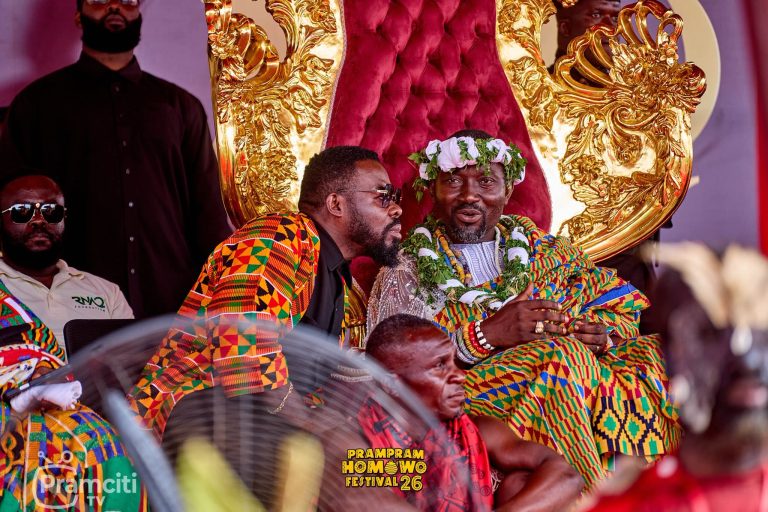
The ancient coastal town of Prampram(Gbugbla) was a vibrant display of culture, spirituality, and unity yesterday as the community marked the grand finale of the annual Kpledo festival.
The event, which serves as the peak of the traditional calendar, brought together the leadership and people of Prampram to honor ancestral spirits and seek blessings for a bountiful harvest in the coming year.
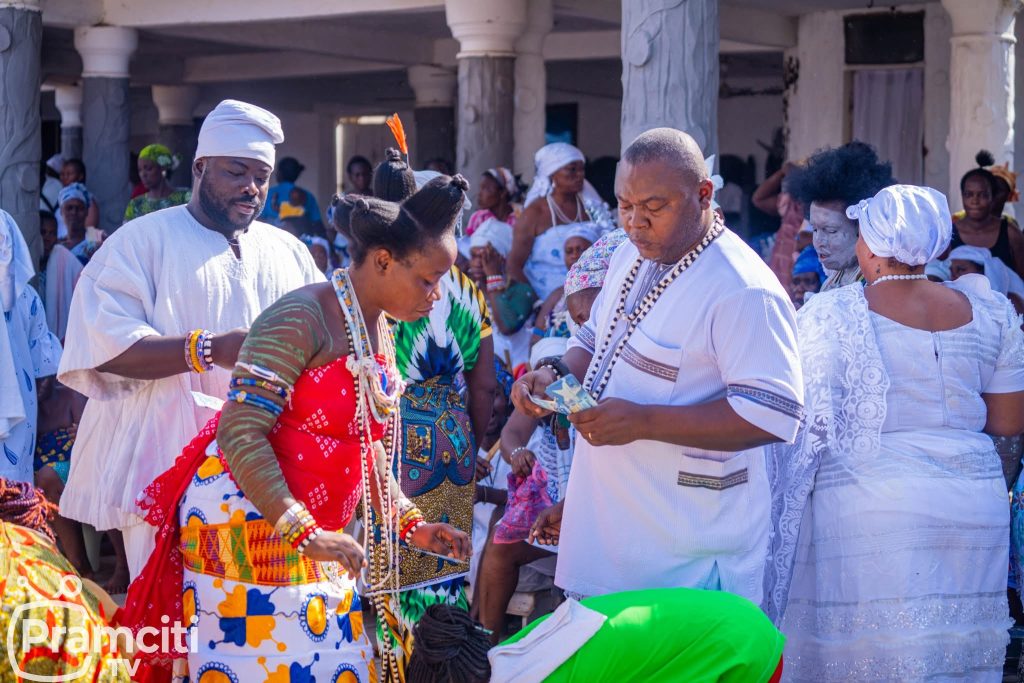
The day began in the early morning hours with sacred rituals and traditional performances performed by the various clans. As the sun rose, the entire community gathered at the central traditional grounds for the Kpele dance.
In a powerful display of collective identity, the community danced continuously to the rhythmic Kpele tunes. In accordance with strict tradition, the dance was performed three consecutive times. At the conclusion of each session, a thunderous, unified “Ohhhh!” echoed through the town, a symbolic hooting intended to cast away bad luck, hunger, and misfortune from the Prampram state.
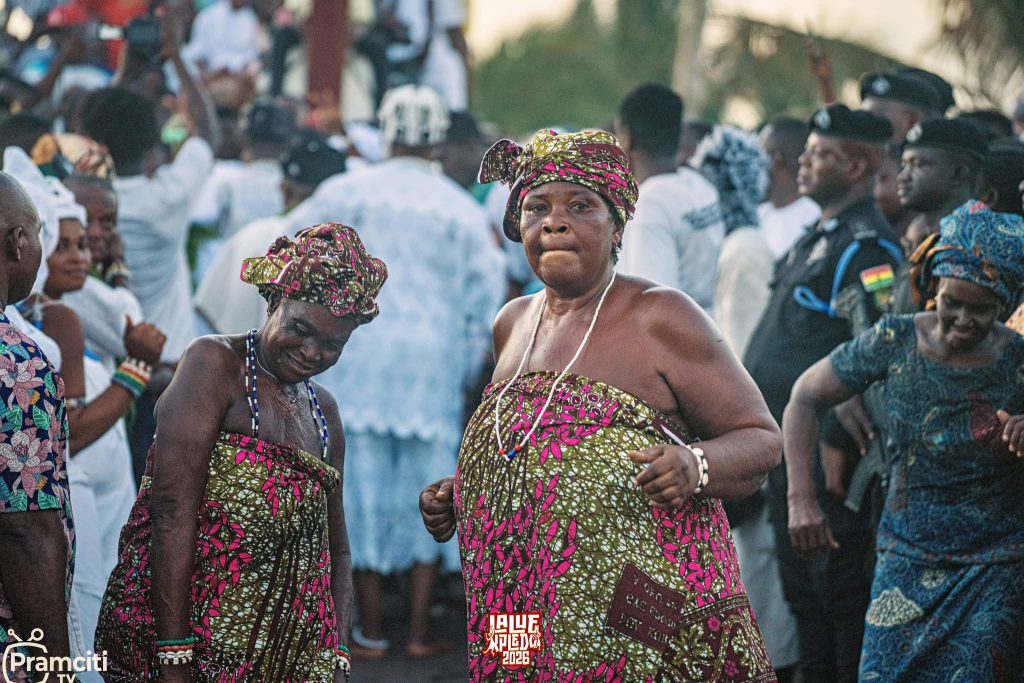
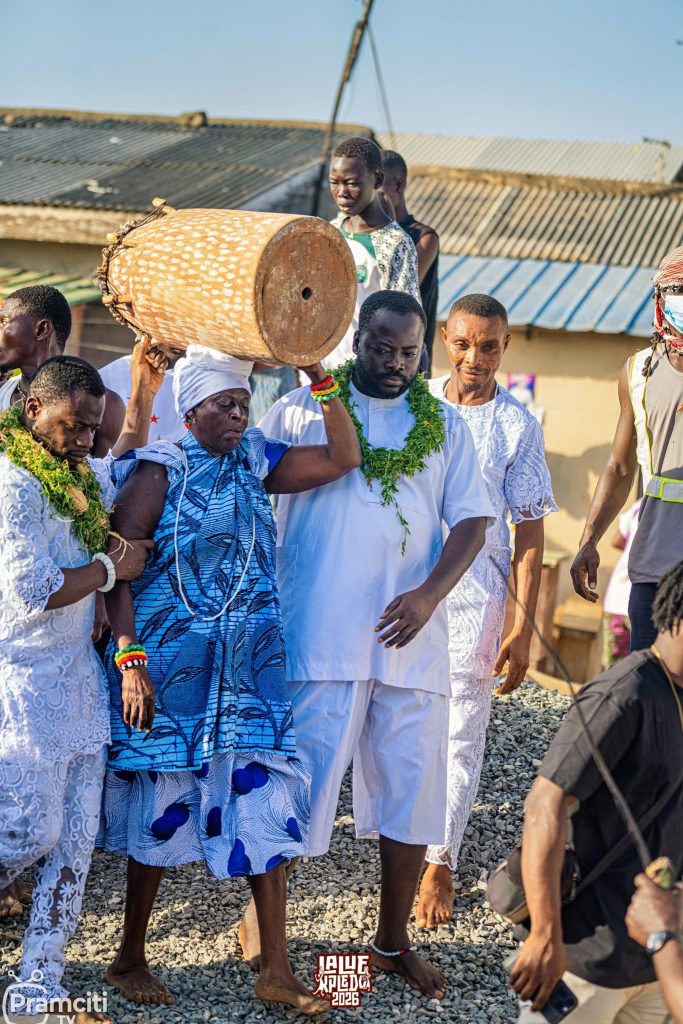
The spiritual focus then shifted as the Kpele mi (the sacred Kpledo drum) was carried in a solemn procession to various traditional forecourts.
At the first stop, the Queen Mother of Prampram, Manye Naa Osabu Abbey I, flanked by other traditional leaders, took to the floor. Following the established custom, she danced to the Kpele tune three times, repeating the process at subsequent traditional grounds to ensure every quarter of the town was blessed.
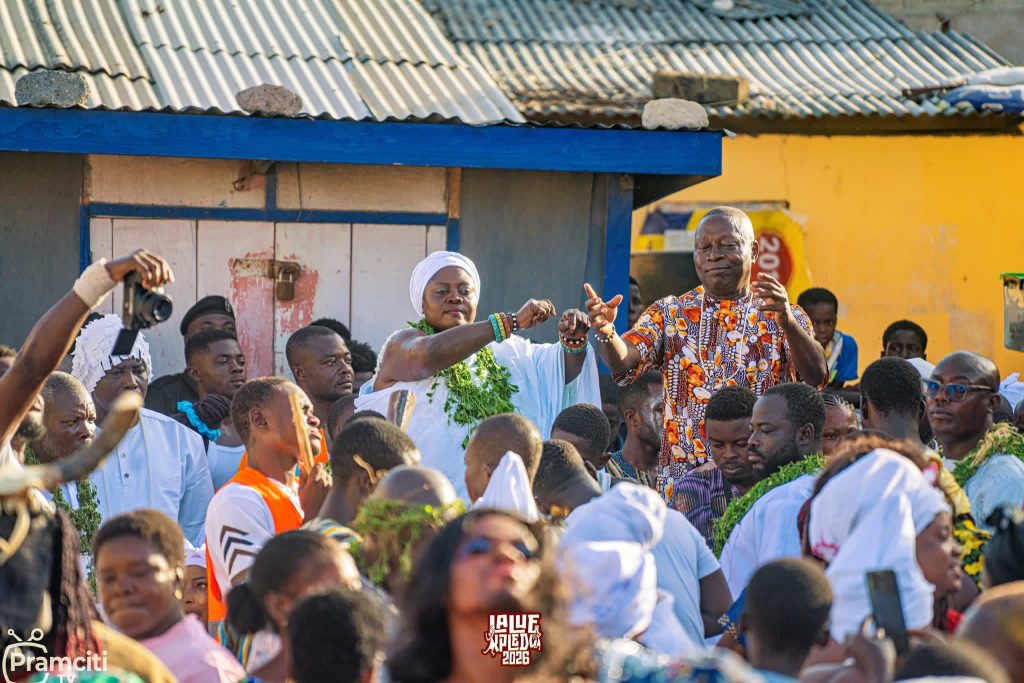
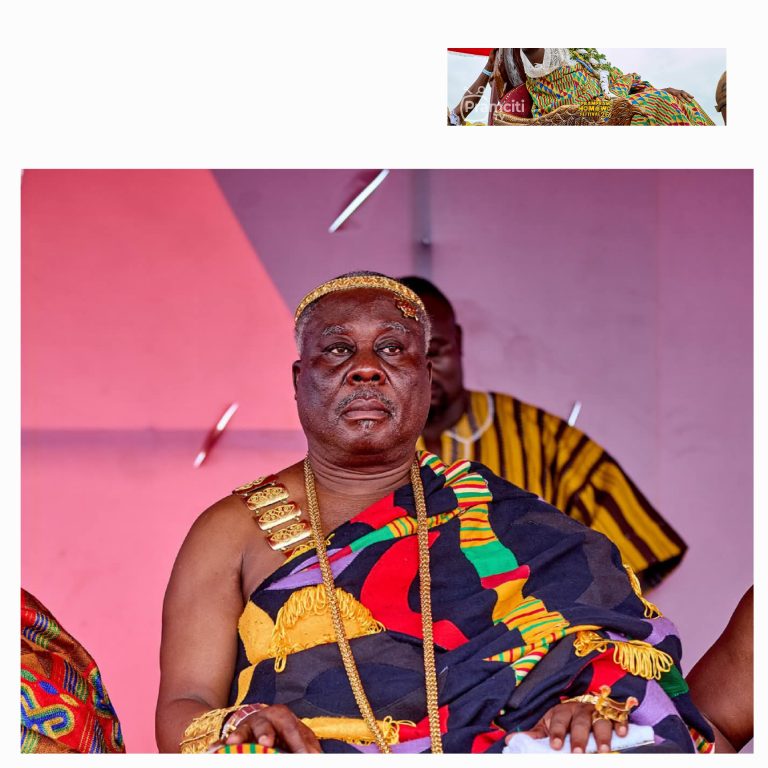
The climax of the royal participation occurred at the forecourt of Osheku Wem. There, the Paramount Chief of Prampram, Nene Tetteh Wakah III, joined the Queen Mother and the traditional leadership in the dance. The sight of the paramountcy dancing alongside the people signaled the deep-rooted unity between the stool and the community.
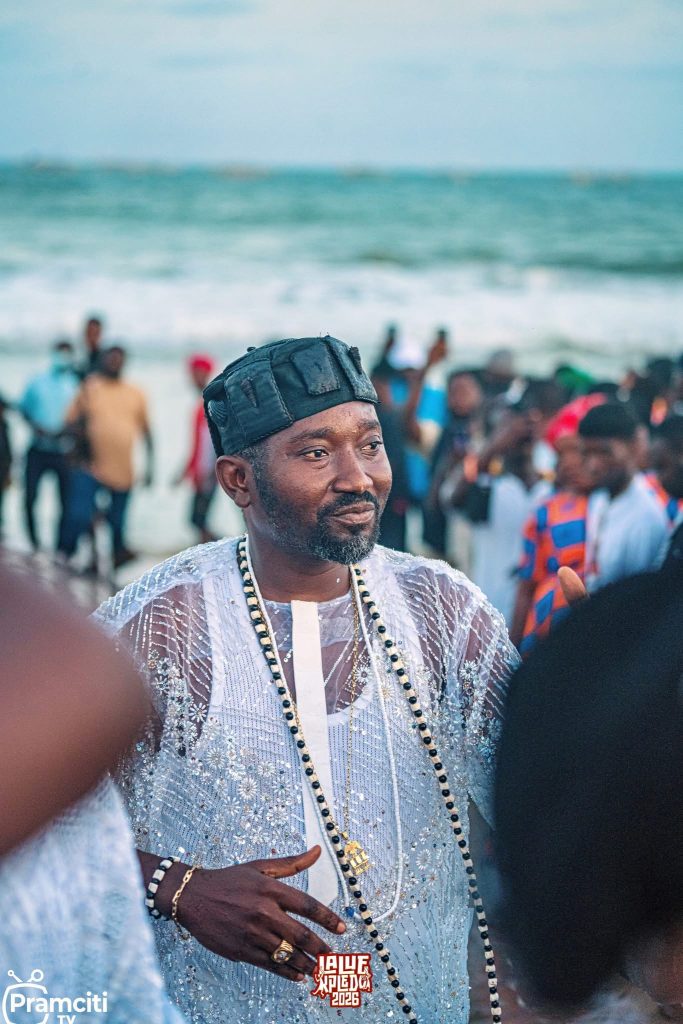
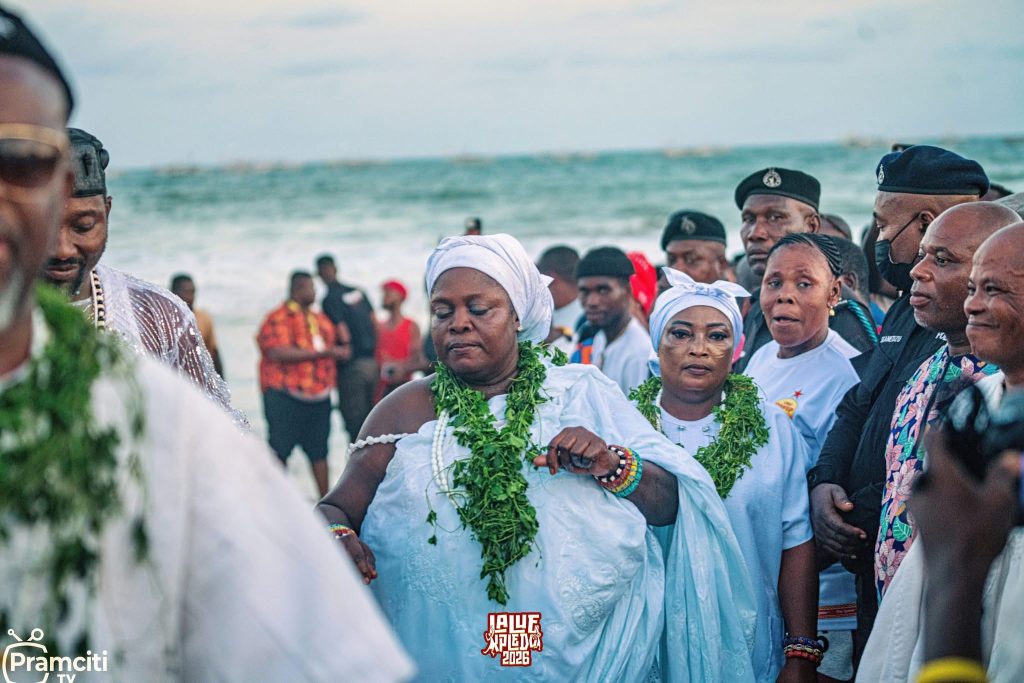
Following the performances at the ancestral houses, a massive procession led by the Paramount Chief, the Queen Mother, and the traditional priests moved toward the coast, escorting the Kpele mi to the shore.
At the water’s edge, several libations were poured by the traditional authorities. These prayers were directed to the deities of the sea and the land, petitioning for:
Protection for the town’s residents.
Bountiful harvests for both farmers and fishermen.
Continued peace within the traditional area.
In the festival’s final and most symbolic act, the Kpele mi was taken into the sea for a ritual cleansing. This act represents the washing away of the past year’s burdens and the spiritual purification of the town’s “heartbeat.”
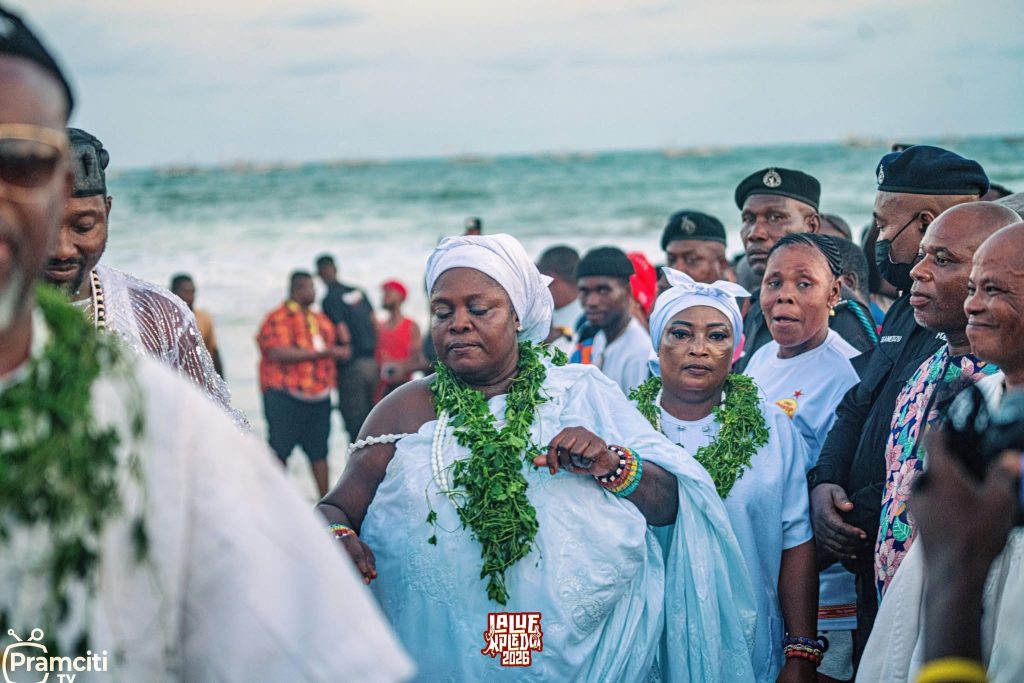
Once the drum was emerged from the water and taken back to its sacred home, the festival was officially declared a success, marking the end of the season’s ban on noise and the beginning of a new cycle of prosperity for the people of Prampram.