
Sadly, this contradiction is most visible in contemporary politics. Christianity and politics become a dangerous mixture when politicians abandon principles such as “As Unto the Lord” and “Thus Saith the Lord” in exchange for self-preservation, greed, power, and partisan convenience. The moment leadership shifts from service to self-interest, hypocrisy is born. And hypocrisy has always been the offspring of selfish ambition disguised as public service.
True political practice, like Christian leadership, demands sacrifice. Leadership without sacrifice inevitably degenerates into exploitation clothed in the language of patriotism and religion. A leader who cannot restrain greed, anger, pride, corruption, or abuse of power cannot claim moral greatness simply because he attends church or publicly quotes Scripture.
The highest evidence of a noble Christian is self-control, the ability to restrain lust, covetousness, abuse of authority, and selfish ambition for the sake of righteousness and justice. Unfortunately, many Christians seeking political titles more than moral responsibility have spiritually backslidden. In such an environment, Christianity becomes ceremonial rather than transformational.
As Christians, we sometimes forget that Satan himself is a diligent student of both the Bible and political systems. He understands Scripture, yet rebels against its authority. He quotes truth, yet works tirelessly to distort it. No wonder Scripture warns that “even the elect shall be deceived.” Therefore, Christians in politics must not merely read the Word, but live it through obedience, discernment, humility, and spiritual vigilance, lest they adopt worldly practices and gradually lose moral direction.
Scripture repeatedly warns believers to remain spiritually vigilant because deception often arrives clothed in familiarity, religion, and outward godliness. The greatest deception is not the absence of religion, but the appearance of holiness without the Spirit of truth, justice, and righteousness. Sadly, this has become increasingly common within politics, where faith is publicly displayed while moral conviction is privately abandoned.
Even the Church itself must reflect deeply on its role in this national contradiction. In many congregations today, politicians receive extraordinary honor and preferential treatment because of the favors, donations, influence, or visibility they offer church leadership. Political status is gradually being mistaken for spiritual authority. This weakens the prophetic voice of the Church and compromises its ability to speak truth to power.
The Church must never become an extension of political parties. Rather, it must train Christian politicians to be guided by conscience, principle, justice, and the Holy Spirit instead of blind partisan loyalty. Christians in politics must defend truth above propaganda, justice above convenience, and national interest above tribal, ethnic, or party interests.
Ghana loudly proclaims Christ, yet corruption continues to flourish within sections of public institutions. We preach righteousness but tolerate bribery. We celebrate prayer while institutional injustice persists. We construct impressive cathedrals, yet neglect the moral conscience required to sustain a just society.
How can a nation claim deep Christian identity while the poor struggle for justice, merit is sacrificed for connections, and public resources are distributed through favoritism and political patronage? How can Christianity flourish outwardly while moral discipline collapses inwardly?
Our politics has increasingly become transactional. Public discourse has become deeply partisan. Even families, churches, and institutions are gradually being infected by systems of nepotism, tribalism, cronyism, and favoritism, where loyalty to bloodline, ethnicity, political affiliation, or personal networks supersedes competence, integrity, and national development.
Christianity without Christian philosophy eventually becomes empty religious performance.
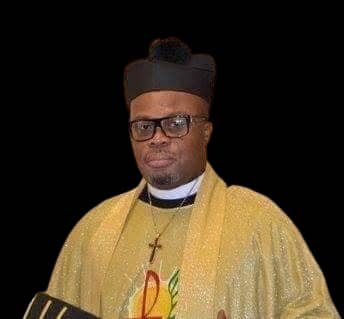
Osɔfo Nii Naate Atswele Agbo Nartey