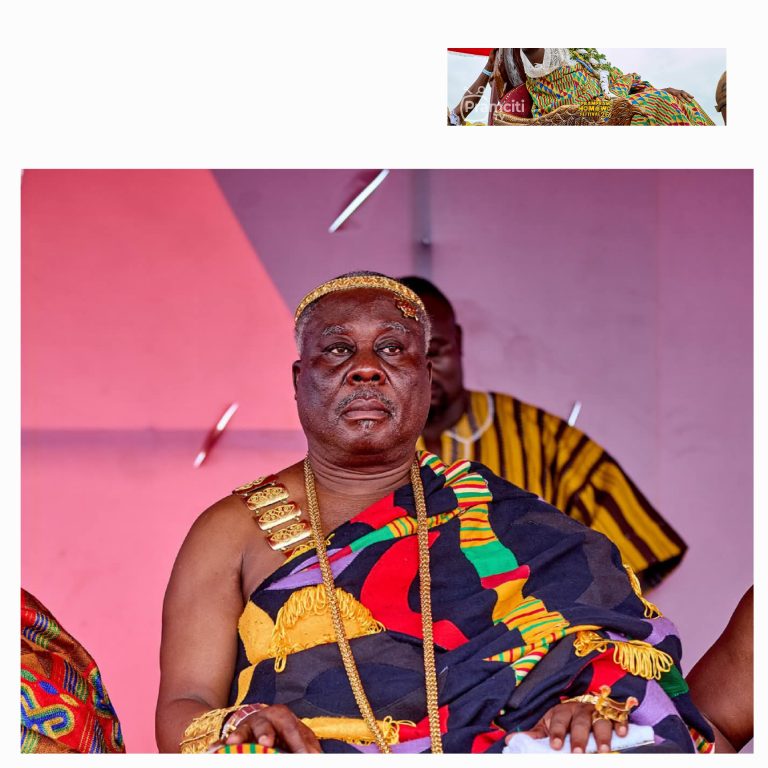

Two Elephants Fight, Grass Suffers
The art of wise, gracious and diplomatic conversation is an important branch of cultural studies, human-service education, African traditional ethics, customary law and moral leadership. Sadly, this aspect of chieftaincy formation appears to be woefully neglected in many traditional systems today.
In former times, chiefs and traditional leaders were not expected to rise and speak carelessly. A chief did not only lead his people in war; he was also expected to demonstrate profound knowledge, wisdom, restraint and diplomacy through his speech.
Although a chief is human, his office demands a character that is above reproach. His subjects observe his conduct, his composure and, perhaps most importantly, his words. A chief whose speech is careless, trivial, abusive or unnecessarily inflammatory diminishes the dignity of the stool he occupies. His lips should therefore not be known for an abundance of empty words about ordinary earthly matters. Rather, he should cultivate the discipline of meaningful conversation and speech that is truthful, pure, measured and constructive.
Those preparing for royal office, as well as those already serving in such positions, should strive for excellence in speech: slow and deliberate delivery, clear pronunciation, appropriate language and a calm tone that preserves the dignity of truth. They should train themselves to speak pleasantly, maintain a teachable spirit, and choose words that are kind, courteous and capable of building rather than destroying.
A chief or royal leader must learn to speak to heal:
“The tongue of the wise brings healing.”
Proverbs 12:18
He must therefore guard against rash words, unnecessary severity, dictatorial language and statements that create division and tension. When a conversation becomes unprofitable, a wise chief should know how to redirect it quietly toward a more constructive subject.
The chief must speak life. He should uplift rather than destroy, reconcile rather than inflame, and provide direction rather than confusion. Criticism, anxiety, suspicion and disorder should never become the defining language of traditional leadership.
The Sacred Responsibility of Speech
The gift of speech is one of the greatest blessings bestowed upon humanity. It gives human beings the extraordinary ability to communicate thought, transmit knowledge, resolve conflict, inspire action and shape relationships.
The tongue may be a little member of the body, yet the words it produces can have enormous consequences. Scripture therefore reminds us that:
“Death and life are in the power of the tongue.”
— Proverbs 18:21
For this reason, speech is not merely a social skill. It is a moral responsibility.
The words of a traditional ruler should reflect his connection to the great men and women who built civilizations, preserved traditions and transmitted wisdom from generation to generation. They should also reflect the God-given virtues of self-control, justice, humility, courage and compassion.
A chief can be justified by his words, and he can also be condemned by them. His speech can strengthen the authority of the stool or weaken it.
Therefore, wise speech is not optional in chieftaincy; it is part of the discipline of the office.
Diplomacy: Power Without Force
African traditional leadership has always had a place for diplomacy. The ability to persuade without coercion, to negotiate without humiliation and to resolve disagreement without violence is itself a form of power.
Diplomatic speech can open doors that physical force cannot open. A carefully chosen word can change the atmosphere of a meeting, preserve a relationship, prevent conflict and create opportunities for cooperation.
In the early 1990s, one African politician whose speech carried profound influence for good on Queen Elizabeth II until her death was Dr. Mohamed Ibn Chambas, then Ghana’s Deputy Minister of Foreign Affairs. The Queen publicly expressed her admiration for his wise speech and phonetics. Because good communication and diplomacy is live wire that lights out human capacity to create changes without direct force, command, and apparent exerting order. So far example, H. E Mohammed Ibn Chambers, though he didn’t say anything new, due to royal and diplomatic protocols, yet he mentored the queen of England positively, in a speech that swayed her
opinions, decisions, or actions indirectly on Africans. Indeed, sound speech can influence public policy, historical outcomes, all social proofs, interpersonal dynamics and authority shift.
The diplomatic career of Ghanaian statesman Mohamed Ibn Chambas provides an interesting example of the importance of communication in international affairs. His public service demonstrated how diplomacy depends not only on formal authority but also on communication, negotiation, cultural understanding and the ability to engage people respectfully.
The lesson for traditional leadership is important: a wise speaker does not necessarily need to say something entirely new to make an impact. Sometimes the power lies in how truth is presented at the right time, in the right tone and with the right spirit.
Words can influence relationships, public attitudes, institutional decisions and the distribution of authority. In that sense, communication can become a form of leadership in its own right.
When the Elephants Fight
There is an African proverb:
“When two elephants fight, it is the grass that suffers.”
This wisdom should never be forgotten by traditional rulers.
When powerful traditional authorities enter prolonged verbal confrontations, the consequences rarely remain confined to the principals. Their subjects, families, supporters and communities can become divided.
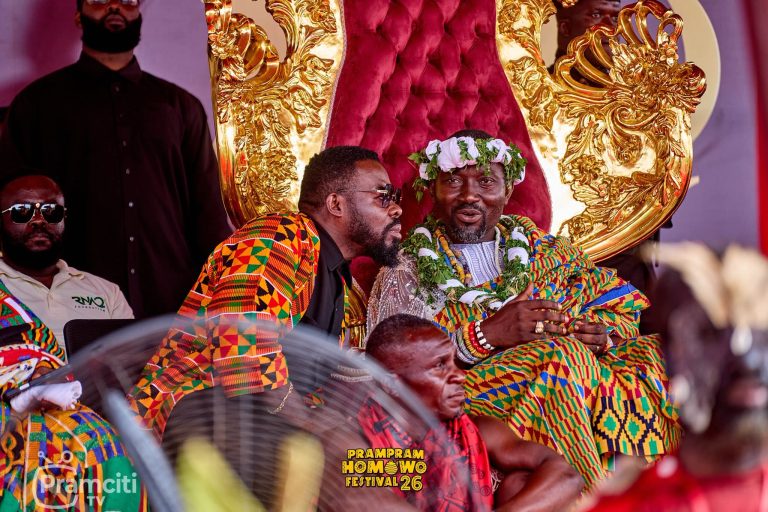
Recent tensions and public disagreements involving prominent traditional authorities in Ghana demonstrate why restraint in speech matters. Whether the disagreement concerns the Asantehene and Dormaahene, the Ga Maŋtsɛ and Nungua Maŋtsɛ, the Okwapimhene and Ga Maŋtsɛ, or the Okyehene and Odua-Etwereso traditional authority, the broader lesson is the same: words spoken by people who occupy sacred and influential offices can have consequences far beyond the moment in which they are uttered.
Not every disagreement is created by speech alone, and traditional disputes often have deep historical, customary and institutional dimensions. Nevertheless, inflammatory language can intensify disagreements that might otherwise be managed through dialogue and established customary processes.
A chief must therefore understand that his anger is never merely personal. His words can become the words of his stool in the eyes of the public.
Self-Control Is Royal Discipline
A traditional ruler must exercise control over his tongue because he exercises influence over people.
Impatient, fretful, insulting or provocative language can damage peace, relationships and public confidence. When such language becomes habitual, the subjects ultimately carry the burden.
From a Christian moral perspective, uncontrolled speech can also become a spiritual danger. Words that produce hatred, confusion, fear and division work against the principles of peace, love, reconciliation and human dignity.
The chief must therefore ask himself before speaking:
Will these words heal or wound?
Will they unite or divide?
Will they clarify or confuse?
Will they strengthen the dignity of the stool or diminish it?
Will my people be better because I spoke, or would wisdom have required me to remain silent?
These are not merely questions of etiquette. They are questions of leadership.
The Chief as a Custodian of Peace
The greatness of a chief should not be measured only by the splendour of his palace, the size of his following, the number of ceremonies he attends or the authority attached to his stool.
It should also be measured by the quality of his wisdom.
A truly great chief knows when to speak and when to remain silent. He knows how to disagree without insulting. He knows how to correct without humiliating. He knows how to defend his people without creating unnecessary enemies. He knows that diplomacy is not weakness and that restraint is not cowardice.
His words should carry the dignity of the stool.
His speech should educate.
His conversation should reconcile.
His counsel should illuminate.
His presence should bring peace.
And when he finally speaks, his people should be able to say:
“This is the speech of a wise chief.”
That is excellence in chieftaincy.
Venerable Dr Nathaniel Nii Naate Atswele Agbo Nartey