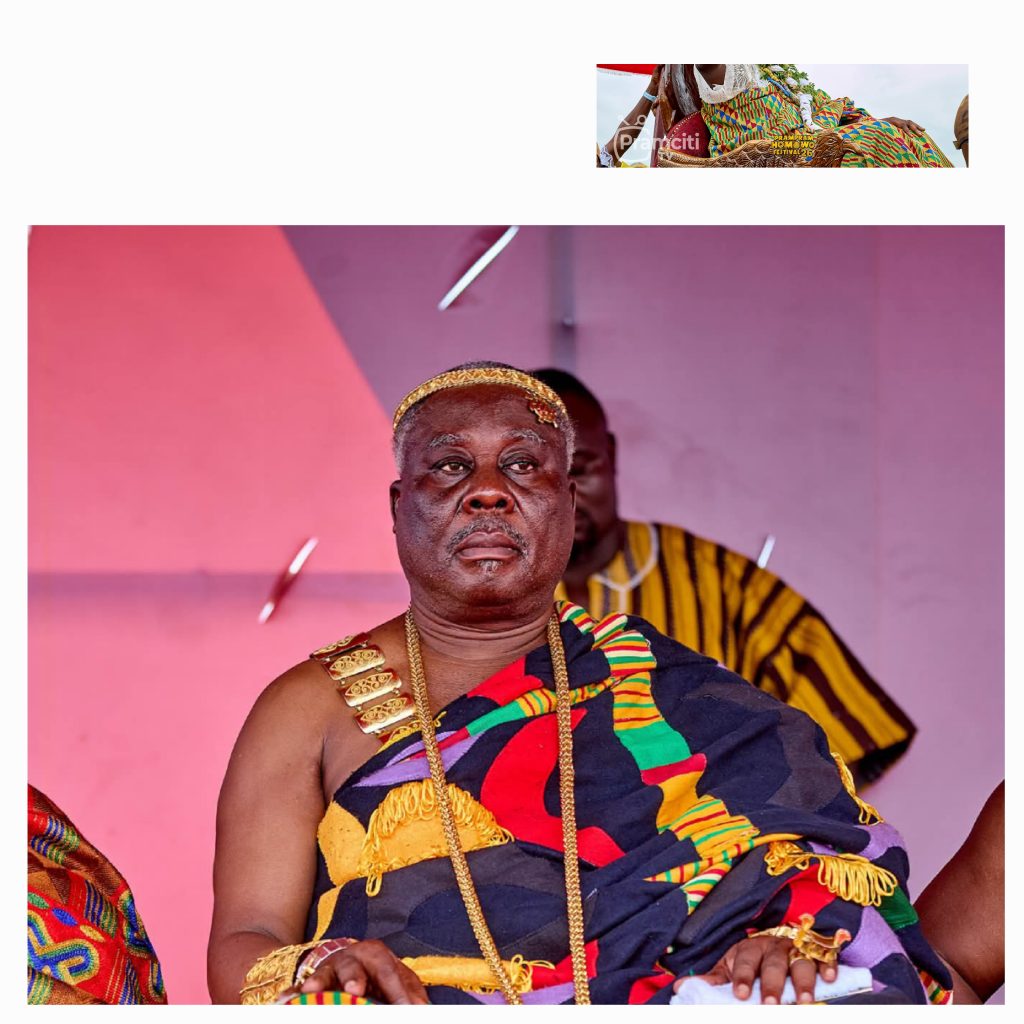
His Royal Majesty, Oboade Notse King Professor Odaifio Welentsi III, the Nungua Maŋtsɛ
The drums of Prampram Kotoko did not merely announce the arrival of the 2026 Homowo Festival, they summoned the ghosts of 1826. And when His Royal Majesty, Oboade Notse King Professor Odaifio Welentsi III, the Nungua Maŋtsɛ and President of the Greater Accra Regional House of Chiefs, rose to speak, he carried the weight of two centuries upon his regal shoulders. It was not merely a festival address. It was a resurrection.
Every GaDangme man and woman who stood in that Prampram forecourt felt the familiar exultation rise in their chests. Professor Welentsi’s voice, that uncommon tenor, that radio era resonance rolled across the gathering like the tide our coastal forebears once navigated. His pronunciations were not mere words; they were melodic cartography, charting the very routes our ancestors took to that fateful battlefield at Dodowa. When he spoke of the Battle of Katamanso, the air itself seemed to thicken. He reminded the gathered crowd that on that day, August 7, 1826 our forefathers did not merely fight; they rewrote history.
The Asantehene, Osei Yaw Akoto, had sworn an oath to pursue the Ga-Adangbe even if they “escaped into the belly of kanfra,” the small flat fish. But our ancestors, led by King Tackie Kome and allied with their Akyem, Fante, and European brothers, stood firm. They held the line for nine hours from six in the morning until three in the afternoon and delivered a devastating victory that paralysed the Ashanti Empire and safeguarded the coast for generations.
What made this Homowo address truly laudable, beyond its breathtaking oratory, was its striking relevance to our present struggles. Professor Welentsi, in his characteristically progressive style, wove the lessons of Katamanso into a powerful appeal for unity. He reminded his audience that the Ga-Dangme victory was not won by one people alone, but by a coalition, a truth we must remember today.
His recent calls for peace echo this historical imperative. “Where there is no peace, there is no development,” he has declared, urging the GaDangme community to settle all individual differences before their festivities are commenced. He spoke with pride of our shared Ga-Dangme identity, lamenting that, too often, our unity in speech does not match our unity in spirit.
The Maŋtsɛ did not shy away from the darker chapters of our history. He reminded us of the “Last Gunshot Site” the very tree from which a Ga marksman climbed to fire the final shot at a fleeing Asante chief, carrying him through the Pinkwaa Forest. As the two hundredth anniversary of this historic battle approaches, Professor Welentsi has made a fervent appeal to preserve these sacred sites, the Dodowa and Pinkwai forests for posterity.
He has urged the government to protect these lands, which are not merely forests but living museums of Ga-Dangme resilience. Yet his vision remains firmly fixed on the future.
His Homowo address at Prampram carried the same message he has championed throughout his reign: Ghanaians must come to the realisation that Ghana belongs to all, hence the need to be patriotic in protecting the environment and the nation at large.
So let the record stand: Professor King Odaifio Welentsi III’s epic speech during the 2026 Prampram Homowo was more than a commemoration, it was a declaration. It declared that we GaDangme are not a people defined by our defeats, but by our victories. It declared that the spirit of Katamanso that unyielding courage that refused to bow to empire lives on in our hearts. And it declared that our future must be forged with the same unity that won us our freedom in 1826.
His voice, his stature, his progressive vision all combined to produce a speech that will be retold in our oral histories for generations. He did not just speak of the Katamanso War; he channelled it. And in doing so, he ensured that the heroes of Dodowa will never be forgotten.
Every time I listen to his speeches, I am exalted and proud as a GaDangme. His tenor radio voice is uncommon, making his pronunciations beautiful and melodic. His stout, majestic presence and departure on state occasions are awe inspiring.
My only worry was when he failed to carry the pageant in the presence of the Asantehene, but that is not too damning when compared to other shambolic GaDangme experiences with the Ashantihene at the recent FIFA World Cup tournament in Canada.
Osɔfo Nii Naate Atswele Agbo Nartey
Professor King Odaifio Welentsi III’s Epic Homowo Address at Prampram 2026
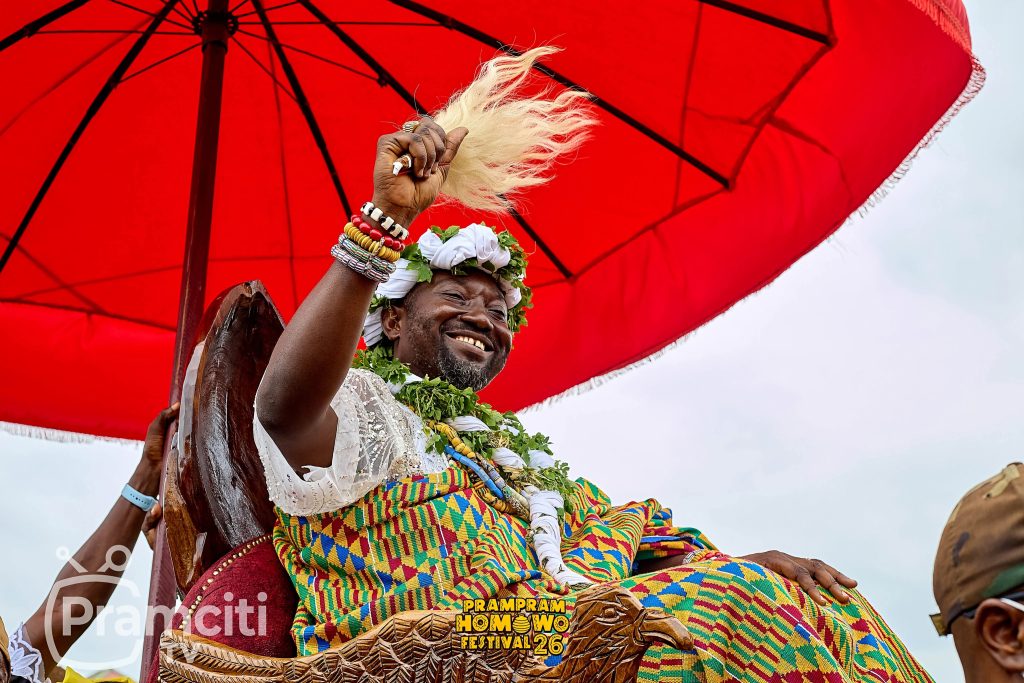
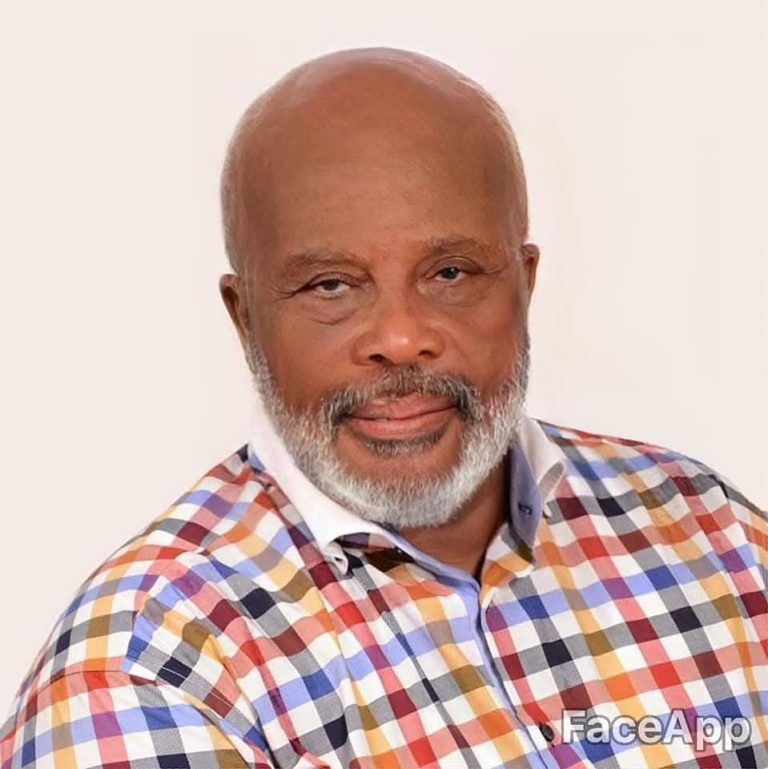
Nene TTetteh Wakah III, Paramount King Prampram Kotoko