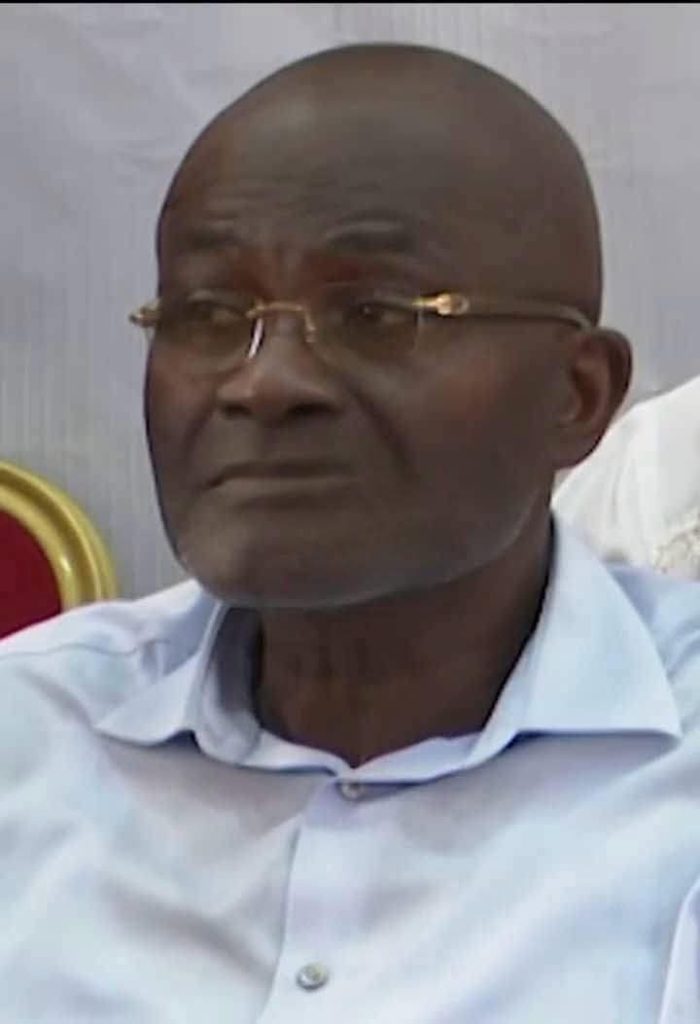
In democratic politics, popularity is not proven by noise, insults, or perpetual internal agitation. It is proven at the ballot box. If, as has been repeatedly claimed, the “masses” are yearning for Kennedy Agyapong, then the most honest and democratic path open to him is clear: he should leave the New Patriotic Party (NPP) and test that popularity independently just as Alan Kyeremanteng has done. If the masses are truly yearning for Kennedy Agyapong, then the clean, honest, and democratic thing to do is exactly what Alan Kyeremanteng did: step out and test your popularity independently.
The contradiction in Mr. Agyapong’s political posture has become impossible to ignore. On one hand, he insists that the NPP establishment is hostile to him, that party elders fear his bluntness, and that internal structures are deliberately stacked against his ambitions. On the other hand, he remains firmly within the same party, contesting its internal processes while denouncing its leadership, traditions, and leading figures. One cannot plausibly claim to be bigger than a party while simultaneously sheltering under its brand.
A man who claims, he’s most popular politician that Dr Mahamudu Bawumia and that masses of Ghanaians appealing to him to run for president, doesn’t need
party intimidation narratives,
internal blackmail and
delegates-begging tours. If Kennedy truly believes his support goes beyond NPP delegates, his popularity is national, and not factional, then all he needs are voters by leaving like Alan left, formed a movement, and said: “Let the people decide.”
That is confidence. That is political honesty. Kennedy Agyapong cannot claim to be bigger than the party and hide under its umbrella at the same time.
Political history teaches us a simple lesson: a politician with genuine mass appeal does not need to fight endlessly within a party he claims has rejected him. He steps out, builds, and submits himself to the people. That is exactly what Alan Kyeremanteng did. Faced with irreconcilable differences within the NPP, he chose a harder but more principled route forming a new movement and asking Ghanaians to judge him directly. That decision, whether one agrees with it or not, was an act of political clarity. Kennedy Agyapong should be forming his own party, that would end the endless internal warfare in NPP, expose whether the “masses” are real or rhetorical and force him to trade insults for policy freely.
If Kennedy Agyapong truly believes that his appeal transcends party delegates, factions, and internal gatekeepers, then remaining in the NPP only weakens his own argument. The NPP is not an empty shell; it is a tradition-bound political organisation with a defined ideological culture, discipline, and expectations of leadership temperament. Repeatedly attacking that tradition while insisting on leading it creates permanent instability and damages party cohesion.
Moreover, the “masses” Mr. Agyapong invokes are not NPP delegates. They are ordinary voters. If his message resonates with them beyond the theatrics of internal party contests, then a national campaign outside the comfort of an established party machinery would prove it decisively. A new party would compel him to move beyond insults and grievance politics and articulate coherent policies on the economy, governance, and national unity.
Remaining within the NPP while portraying oneself as a victim of party elites also raises a troubling question: is the appeal truly mass-based, or is it dependent on the very structures being criticised? You cannot denounce the party’s legacy, undermine its leadership, and still expect to inherit its platform without consequence. That posture suggests dependence, not independence. So yes!
If the masses are truly yearning for Kennedy Agyapong, he should walk the Alan Kyeremanteng path and face the people directly. Anything else is just noise dressed up as populism
In the end, democracy rewards courage and consistency. If Kennedy Agyapong believes he represents a new political force, then he should do what all confident political actors eventually do stand on his own feet and face the electorate directly. Until then, the claim that “the masses are yearning” will remain just that: a claim, loud but untested.
By Osɔfo Nii Naate Atswele Agbo Nartey