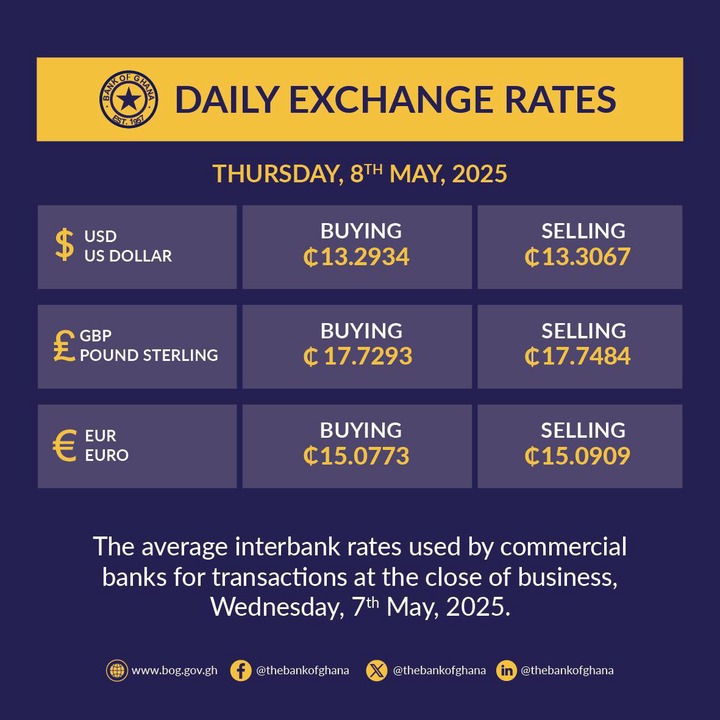
On May 8, 2025, Ghana’s national currency, the cedi, experienced a slight appreciation against several key international currencies, reflecting a sense of cautious optimism regarding the nation’s economic prospects. The Bank of Ghana reported the following interbank exchange rates:
These rates serve as a standard for foreign exchange dealings within the country. However, it is important to note that the rates provided by commercial banks can differ. For instance, Stanbic Bank Ghana reported its rates for May 7 as follows:
– USD: 12.8000 (buying), 14.0000 (selling)
– GBP: 17.0867 (buying), 18.7026 (selling)
– EUR: 14.5395 (buying), 15.9152 (selling)
The cedi’s modest appreciation coincides with a decrease in Ghana’s inflation rate, which fell to 21.2% in April from 22.4% in March. Analysts attribute this positive trend to the central bank’s ongoing interventions in the foreign exchange market and its tightening of monetary policy.
For importers, exporters, and individuals engaged in foreign transactions, these fluctuations in exchange rates are crucial for effective planning and budgeting. A stable or strengthening cedi can help lower import expenses, although it may pose challenges for export competitiveness.