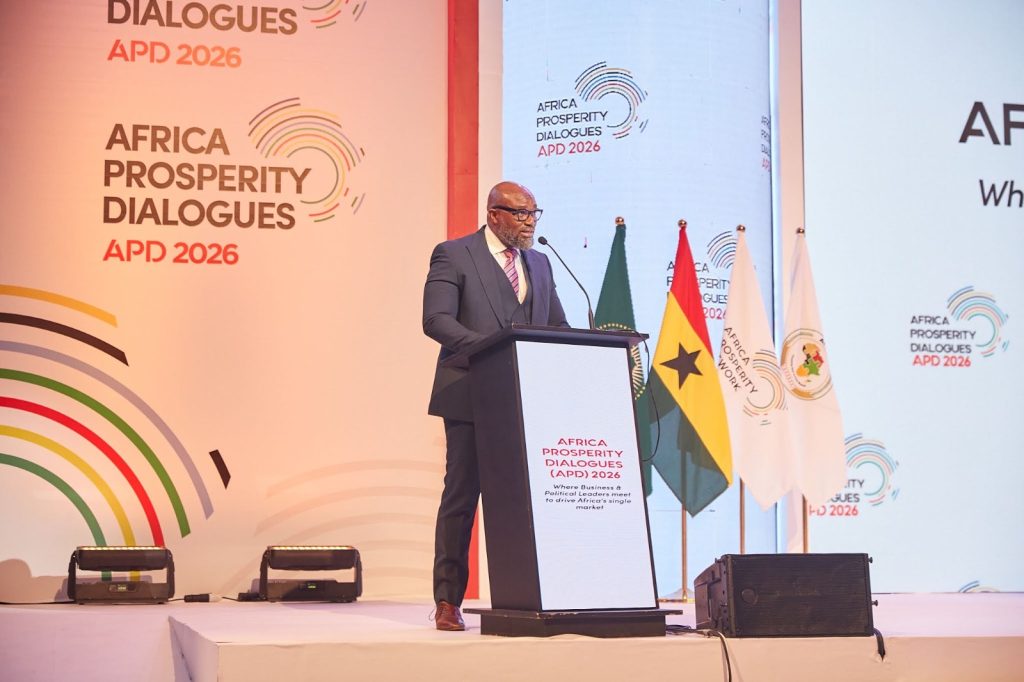
Executive Chairman of the McDan Group, Dr. Daniel McKorley, has called for practical and coordinated action to ensure Africa’s Single Market delivers real benefits for small and medium-sized enterprises (SMEs), women, and young entrepreneurs.
Speaking at the Africa Prosperity Dialogue 2026, Dr. McKorley said that while the African Continental Free Trade Area (AfCFTA) has created one of the world’s largest trading blocs, opportunity alone will not translate into prosperity without the right systems and support structures.
“Africa’s single market is no longer a dream. But opportunity alone does not create prosperity. Access does. Systems do. Support does.”
He noted that SMEs account for nearly 80 percent of jobs in Africa and contribute about half of the continent’s GDP, making them central to the success of AfCFTA. However, many African businesses still find it easier to trade with Europe or Asia than with neighbouring African countries.
Drawing on his experience in logistics and trade, Dr. McKorleyhighlighted the impact of non-tariff barriers such as duplicated inspections, inconsistent standards, and border delays, which tend to hurt small businesses the most.
“We cannot build a single market if we still have 54 different ways of saying a product is safe.”
He called for the adoption of digital customs systems, one-stop border posts, and mutual recognition of standards to simplify cross-border trade and reduce delays.
Dr. McKorley also drew attention to the high cost of logistics in Africa, noting that transport costs on the continent can be two to three times higher than global averages. He explained that while such costs reduce profit margins for large corporations, they can completely erase the viability of SMEs.
“Trade does not grow where trucks spend more time waiting than moving.”
On access to finance, he pointed to the significant funding gap facing African SMEs and stressed the need for credit guarantee schemes, blended finance, and development finance institutions willing to support long-term growth rather than short-term returns.
He further emphasised the importance of supporting women in trade, noting that women own a substantial share of Africa’s SMEs yet face the greatest barriers to capital and market access.
“When you support a woman in business, you strengthen a supply chain, a family, and a community.”
Addressing youth entrepreneurship, Dr. McKorley said Africa’s young population represents a major opportunity if properly supported. He called for stronger links between youth-led businesses and real value chains in agriculture, manufacturing, logistics, and digital services to help them scale beyond pilot stages.
He concluded by urging governments, investors, and the private sector to work together to remove practical trade barriers and build integrated ecosystems that allow businesses to grow across borders.
According to Dr. McKorley, AfCFTA will only succeed if small businesses across the continent are able to think and operate as African businesses rather than purely local ones.